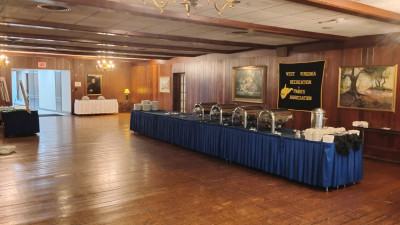
It's Autumn only a couple minutes East of Morgantown in Cheat Lake, WV. I am attending an annual conference at the Lakeview Resort. We are having dinner. There are about 30 of us in the entire hotel not counting the 10 or so person skeleton crew running the operation - the main course is roast beef that sat on a cutting board below heat lamps with a man in a crumpled chef’s hat cutting up slices for anyone wanting a piece. If you didn’t fancy the beef, you had your choice of pre-made chicken cordon bleus or a salad bar that consisted of one large bowl of salad, and two identical bowls with similar volume filled to the top with dressing
► Show Spoiler
(this irked me since they were leaving out double the amount of dressing as they had salad.)
The food was being served in the old grand hall. A medium sized room with an all-wood interior, which I believe was the original structure when Lakeview was just a country club back in the 40s. It smelled of old wood and books with a slight bite of ash from the old fireplace. Ages ago, members of the Appalachian well-off (oxymoronic, I know) would host meetings, drink expensive whiskey and smoke cigars in-between banquets, golf games, and swims in the pool. But now it was a place to serve food that would have been considered fancy back in the 70s.
After dinner, everyone else decides to go to the bar. I, being the sensitive young man™ that I am, decide to go back to my room. The whole building is shaped like a “C” and my room is on the total opposite side of the place so I put on my headphones and waltz down the hallways for what will become a very surreal experience. There were a couple ages to the Lakeview Resort. The grand hall being the oldest, and right behind me was an addon that felt like it was either erected tastefully in the 70s, or distastefully in the 90s - that's where the bar was.
As the sounds of my colleagues' tipsy clamour got quieter I reached the main lobby. This was another stark transition as the old gave way to faux white granite laminate and gold ornate chandeliers that stank Chinese of foreign investment sensibilities. The front desk guy sat on his phone watching some sort of short-form content with one cheap knock-off airpod in one ear. Him and I had developed some mild level of rapport. I don’t know why. Maybe it's because we both are considerably younger than the majority of the conference goers, or maybe it's because I told him on the first day that this place was a dump, and that made me interested in it. Whose to say.
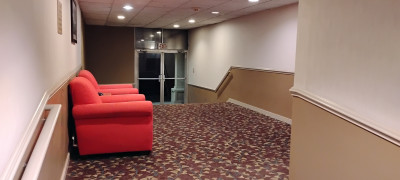
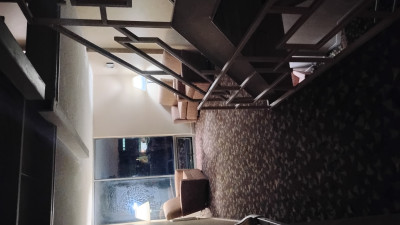
The halls past that point were damp, poorly lit, and uninhabited. I didn’t stumble across a single soul while I went back and forth through the maze of halls. The layout doesn’t make much sense and there were leaks in the roof at every turn that saturated the carpet. The entire time I LARPed heavily with a liminal space playlist I found on spotify. It was a good time. I can’t describe why, but there was this satisfaction with living the aesthetic, but I still felt odd. I felt that weird feeling you get when looking at liminal space images and I wanted to figure out why.
I should note that I am going to be focusing on the original pieces of work that were created around the beginning of this decade. If you look now you will find a lot of garbage that has been victim of countless algorithmic cycles finding and amplifying the lowest common denominator. A good example of early liminal work is the "strangely familiar places with unnerving music” series by the youtuber float. I suggest watching these videos on mute first to understand that the unnerving quality exists without any of the flourishment. Also, as a clarification I am using the term “liminality” as a signifier for the quality that liminal spaces possess which is different from its literal meaning as “transitional stage” or “threshold.”
When watching these images go by one finds themselves experiencing a strange feeling. Most of these photos are low quality photos of dated residential or commercial interiors almost always empty of furniture and always devoid of people. I have heard a lot of people only focus on the emptiness itself, but the dated aspect plays a very important role. These images communicate above all else a feeling of loss, but to many that feeling is unexplainable because to truly identify where it's coming from you have to face some harsh realities about the West in the 21st century.
We are in an era of decline. Western societies are undergoing massive social and economic restructuring and it is all for the worse. The middle class, once a comfortable cohort and economic engine of this land is being strangled. The social institutions we all used to take for granted are being dissolved by the immense power of atomizing technology and algorithms. We are bowling alone, if we can even justify the cost of admission in the first place. It is in this social and economic precarity that liminality can resonate with people.
These spaces elicit strange feelings because they are empty, but it is a specific kind of emptiness. It is not some post-apocalyptic return to the earth, but an emptiness that came from choice. An emptiness that came from neglect. An emptiness that can only come about from decline. Liminality is an uneasy feeling of seeing the last remaining relics of a by-gone golden age slowly rot. It is the uneasy feeling of understanding that we are never going back and things will only get worse. Liminal spaces are relics of a better time, left to fade. It's one thing to stand amongst the ancient runs of the empire that fell centuries ago, or to watch as the great temples burn in front of you. It is another feeling when you see the relics before you slowly oxidize. There is no pivotal moment of collapse; no one thing that marks the end of all function. Liminality is a ghost whimpering in an empty room with no one to hear.
would.